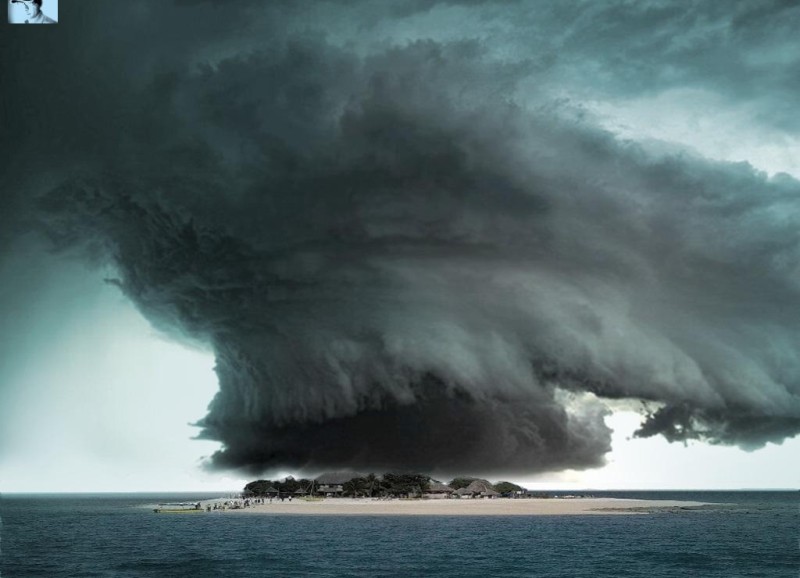
According to two research scientists the mystery of vanished ships and airplanes in the region dubbed "The Bermuda Triangle" has been solved.
Step aside outer space aliens, time anomalies, submerged giant Atlantean pyramids and bizarre meteorological phenomena ... the "Triangle" simply suffers from an acute case of gas.
Natural gas—the kind that heats ovens and boils water—specifically methane, is the culprit behind the mysterious disappearances and loss of water and air craft.
The evidence for this astounding new insight into a mystery that's bedeviled the world is laid out in a research paper published in the American Journal of Physics.
Professor Joseph Monaghan researched the hypothesis with honor student David May at the Monash University in Melbourne, Australia.
The two hypothesized that large methane bubbles rising from the ocean floor might account for many, if not all, of the mysterious disappearances of ships and aircraft at specific locales around the world.
Researcher Ivan T. Sanderson identified these mystery areas during the 1960s. Sanderson described the actual shape of these regions as more like a lozenge rather than a triangle. Some of the more famous spots include an area in the Sea of Japan, the North Sea, and of course the infamous "Bermuda (or Devil's) Triangle."
Oceanographic surveyors of the sea floor in the area of the Bermuda Triangle and the North Sea region between continental Europe and Great Britain have discovered significant quantities of methane hydrates and older eruption sites.

Because of the correlations and existing data, the two envisioned what would happen when gigantic methane bubbles explode from natural fissures on the seafloor.
The methane—normally frozen at great pressure as gas hydrates embedded within subterranean rock—can become dislodged and transform into gaseous bubbles expanding geometrically as they explode upwards. When these bubbles reach the surface of the water they soar into the air, still expanding upwards and outwards.
Any ships caught within the methane mega-bubble immediately lose all buoyancy and sink to the bottom of the ocean. If the bubbles are big enough and possess a high enough density they can also knock aircraft out of the sky with little or no warning. Aircraft falling victim to these methane bubbles will lose their engines-perhaps igniting the methane surrounding them-and immediately lose their lift as well, ending their flights by diving into the ocean and swiftly plummeting